
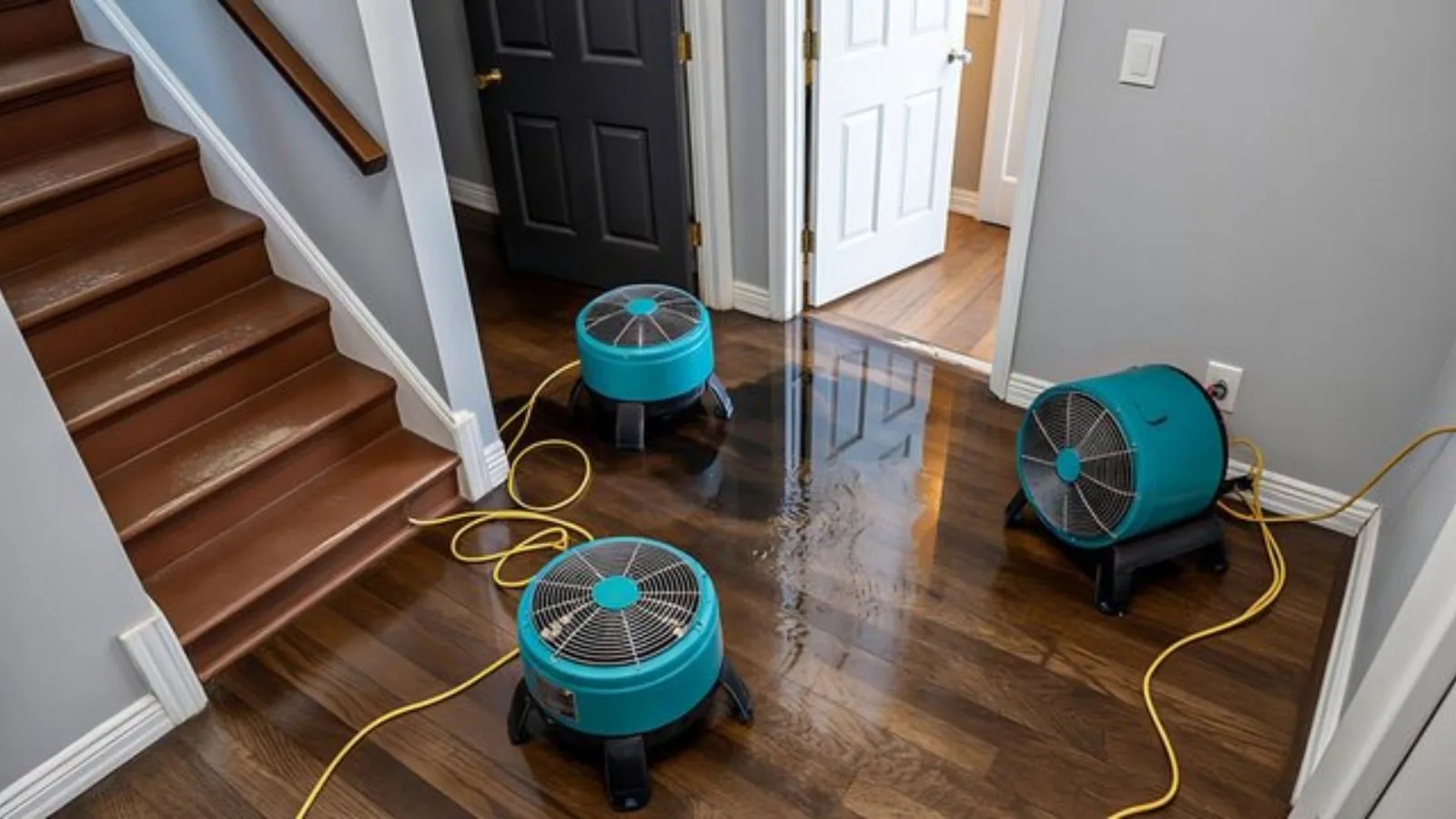
Water Damage Restoration in Findlay, OH
Water damage restoration and repair for Findlay homes and businesses, with a dispatch line that answers day and night. Call, stop the source if it is safe to do so, and licensed and insured crews are arranged to extract, dry and rebuild.
- Licensed and insured
- Scope and price explained first
- Serving Findlay and nearby towns
Dispatch at a glance
- Licensed and insured crews
- Documentation for your insurance claim
- 24/7 emergency dispatch
- Findlay, OH and nearby towns
Active water damage in Findlay right now?
The dispatch line is open every hour of every day. Call first, then follow the safety steps below while help is arranged.
What water damage restoration means in Findlay
Water damage restoration is the work of removing standing water, drying the structure and its contents, and repairing whatever could not be saved. In Findlay, OH it usually begins with a call at an awkward hour. A supply line lets go behind a wall, a sump pump quits during a storm, or the Blanchard River pushes water into a low spot. Findlay Water Damage Pros exists for that call.
Water damage repair follows a fixed order. The source is stopped or isolated, the water is extracted, the structure is dried with air movers and dehumidifiers, and only then are drywall, flooring or cabinets rebuilt. Skipping ahead is how a small leak becomes a rot and odor problem six weeks later, so each step below is explained in plain words.
Before you call, do these three things
Shut off the main water valve if the source is plumbing. Turn off power to the wet area only if you can reach the panel without standing in water. Lift valuables, paper and electronics off the floor and keep people and pets out of dirty water.
If water is touching outlets, a panel or a gas appliance, leave the room and call the utility or 911 before you call a restoration line.
Most callers want two answers fast. What is this going to involve, and what is it going to cost? The first answer depends on where the water came from and how long it sat. The second is explained to you before work starts, in writing, with the scope broken into extraction, drying and repair. You will not be asked to approve a number you have not seen.
Nineteen service pages, sorted by where the water came from
Pick the page that matches your situation. If you are not sure, call and describe what you see, and dispatch will point you to the right crew. Flooding from the river is handled on the flood damage cleanup page, and a wet basement has its own page for basement water cleanup.
Pipes and plumbing
Water from a pressurized line, a thawed blockage or a failed tank. Each page opens on its own source and its own shut-off steps.
Appliances and HVAC
Condensate, supply hoses and drain lines. These leaks are often slow, which is why the damage is usually worse than the puddle suggests.
Weather and building envelope
Water that gets in through the roof, the walls, the ground or the river. The fix depends on whether it fell, seeped or rose.
Water removal and drying
The mechanical side of the job: pumps, extraction units, air movers, dehumidifiers and moisture mapping, plus contaminated water handled safely.
Floors and walls
Repairs sorted by what got wet. Wood, carpet and drywall react differently, so each has its own page and its own timeline.
Commercial
Shops, offices and multi-unit buildings where downtime matters as much as the water.
What happens in the first 24 to 72 hours
Water damage restoration is a race against time because wet materials keep absorbing and the water itself can get worse. The ANSI/IICRC S500 standard for professional water damage restoration sorts water into three categories, and it recognizes that water can slide into a dirtier category when it sits. A clean supply-line leak is a very different job from the same leak after two days in a warm, closed-up house.
| Category | Typical source | What it means for the job |
|---|---|---|
| Category 1 | Broken supply line, overflowing sink, tank failure | Clean at the source. Extraction and drying usually come first, and materials can often be saved. |
| Category 2 | Washing machine or dishwasher discharge, toilet overflow without solids | Contains contaminants. Porous materials such as carpet pad are more likely to be removed. |
| Category 3 | Sewage backup, river or surface floodwater | Grossly contaminated. Containment, protective gear and removal of affected porous materials are standard. |
Categories follow the ANSI/IICRC S500 standard. A restoration crew classifies your water on site, because the category can change with time and contact.
Day one is extraction and assessment. Moisture meters and a thermal imaging camera find water that has traveled into walls and subfloors, which is the part you cannot see. Day two and three are drying, with air movers pushing air across wet surfaces and dehumidifiers pulling the moisture out of the room. Readings are taken each visit so the drying can be shown to be finished, not guessed at.
If you want the deeper version, the structural drying page explains the equipment, and the water extraction page covers the pump-out stage.
What the 24/7 dispatch line actually gives you
A person at any hour
The line is staffed around the clock, because pipes do not wait for business hours and neither does a sump pump failure.
A written scope first
Extraction, drying and repair are listed separately so you can see what each stage involves before it starts.
Equipment named plainly
Air movers, LGR dehumidifiers, moisture meters and extraction units are explained in ordinary language, not trade shorthand.
Paperwork for the claim
Photos, moisture readings and equipment logs are what an adjuster asks for, so they are recorded as the job moves along.
From first call to dried and repaired
- 1
Call dispatch
Describe what you see and where the water is coming from. Dispatch tells you what to shut off and arranges a crew.
- 2
Assessment
The crew inspects with moisture meters and thermal imaging, classifies the water and writes up the scope of work.
- 3
Mitigation
Water is extracted and the structure is dried. Wet materials that cannot be saved are removed.
- 4
Restoration
Drywall, flooring and finishes are repaired so the space is back in use.
What moves the cost of water damage repair in Findlay
No honest company can quote a number over the phone for water it has not seen. What it can do is tell you which factors push the price up or down, so the quote you receive makes sense. Local pricing, labor and material costs vary, so treat anything online that lists a flat price per job with suspicion.
| Factor | How it changes the job |
|---|---|
| Water category | Category 3 water means containment, disposal and more removal, which adds labor and time. |
| Affected area | More square feet of wet floor and wall means more equipment and more drying days. |
| Materials involved | Hardwood, plaster and insulation hold water differently than tile or concrete. |
| Drying days and equipment | Each air mover and dehumidifier on site is part of the scope, and the drying time sets the rental period. |
| Rebuild scope | Replacing drywall, paint, trim and flooring is a separate stage from mitigation and is itemized separately. |
No exact prices are listed here because they would be guesses. Call for a written scope based on your actual damage.
How insurance fits into a water damage repair
Document first, then talk to your insurer
Sudden and accidental water damage is often covered, while gradual leaks and neglected maintenance often are not. Check your policy or ask your insurer, because wording varies. Crews record photos, moisture readings and equipment logs so you have records to hand over.
Flood damage works differently. The Ohio Department of Insurance notes that flood insurance is typically not included in homeowners, renters or business policies, that it is bought separately, and that a waiting period usually applies. For Findlay homeowners near the Blanchard River that is worth a call to an agent before the next heavy rain, not after.
The department runs a consumer line at 800-686-1526 and a website at insurance.ohio.gov for coverage questions. Nobody on this line can promise how a claim will be decided, and we do not name or recommend any insurer.
- Photograph and video every wet room before anything is moved or thrown out.
- Keep damaged items until your adjuster says they can go, or photograph them thoroughly first.
- Save receipts for emergency repairs and equipment, since many policies reimburse reasonable mitigation costs.
- Write down the date and time you noticed the damage and what you did about it.
Water damage in Findlay has a river in the story
The Blanchard River runs through Findlay, and the National Weather Service records show how serious it can get. Heavy rain from August 19 into August 21, 2007 sent the river to near its record stage, and the record is 18.5 feet from 1913. If your home or shop sits low, check the FEMA flood map for your address and ask the city zoning office about floodplain rules before you rebuild.
Water that came from the river or from storm runoff is Category 3 under the S500 standard, so the cleanup is not a mop-and-fan job. The flood damage cleanup page covers what that involves and how to prepare.
Findlay's own water system is a separate matter. The city runs two reservoirs in Marion Township and a treatment plant that supplies Findlay and the surrounding area, and it asks anyone digging to call 811 first. A suspected main break or a water bill that suddenly spikes belongs to the city utility first, and to a restoration crew only after the water is shut off.
Downtown, the Findlay Downtown Historic District near Courthouse Square has older commercial buildings where hidden supply lines and flat roofs are common causes of leaks. If you manage space there, the commercial water damage page explains how a business loss is handled.
Winters here bring about 24 inches of snow in an average year according to NOAA's 1991 to 2020 normals, with a record low of minus 21 degrees. That is why the frozen pipe page and the ceiling water damage page get read hardest between December and March.
Neighborhoods We Serve
Findlay has older areas where water damage looks different. These guides cover three of them.
Downtown Findlay
Older storefronts, upstairs apartments and basements around Courthouse Square and the National Register downtown district.
University of Findlay area
Rental houses, shared housing and older homes around the North Main Street campus.
South Main Street
Older homes with hardwood floors, plaster walls and original basements along South Main Street.
Findlay water damage questions
Is water damage restoration available 24/7 in Findlay?
Yes. The dispatch line answers every hour of every day, including nights, weekends and holidays. Same-day response is offered when crews are available, and dispatch will tell you honestly what to expect when you call.
While you wait, shut off the water source, keep power off in wet areas if it is safe, and move valuables out of the water.
What is the difference between water damage restoration and repair?
Restoration usually means the emergency stage: extraction, drying and cleaning so the structure is stable and dry. Repair is the rebuild afterward, such as replacing drywall, flooring or cabinets. Most jobs need both, and the written scope keeps them separate so you can see what each costs.
How much does water damage restoration cost in Findlay?
It depends on the water category, the affected area, the materials involved, the drying time and the rebuild scope. Nobody can responsibly quote a price without seeing the damage. Call for a written scope, and compare it against the five factors in the cost table above.
Does homeowners insurance cover water damage?
Sudden and accidental water damage is often covered, while gradual leaks and flooding often are not. Wording varies, so check your policy or ask your insurer. Flood coverage is usually a separate policy. See the flood damage page for what to document.
Can I dry out the water myself?
Small, clean spills on hard surfaces, yes. Water that soaked drywall, insulation or subflooring is another story, because the moisture is inside the structure where a fan will not reach it. Sewage or floodwater should go to a professional. The structural drying page explains why.
Do you serve Van Buren, McComb and Arlington?
Do you handle businesses as well as homes?
Yes. Commercial losses have different priorities such as downtime, tenants and inventory. The commercial water damage page walks through how those jobs are scoped.
Water spreading right now?
Call the 24/7 dispatch line. Stop the source if it is safe, and we will arrange the rest.
☎ Call (567) 406-9153