
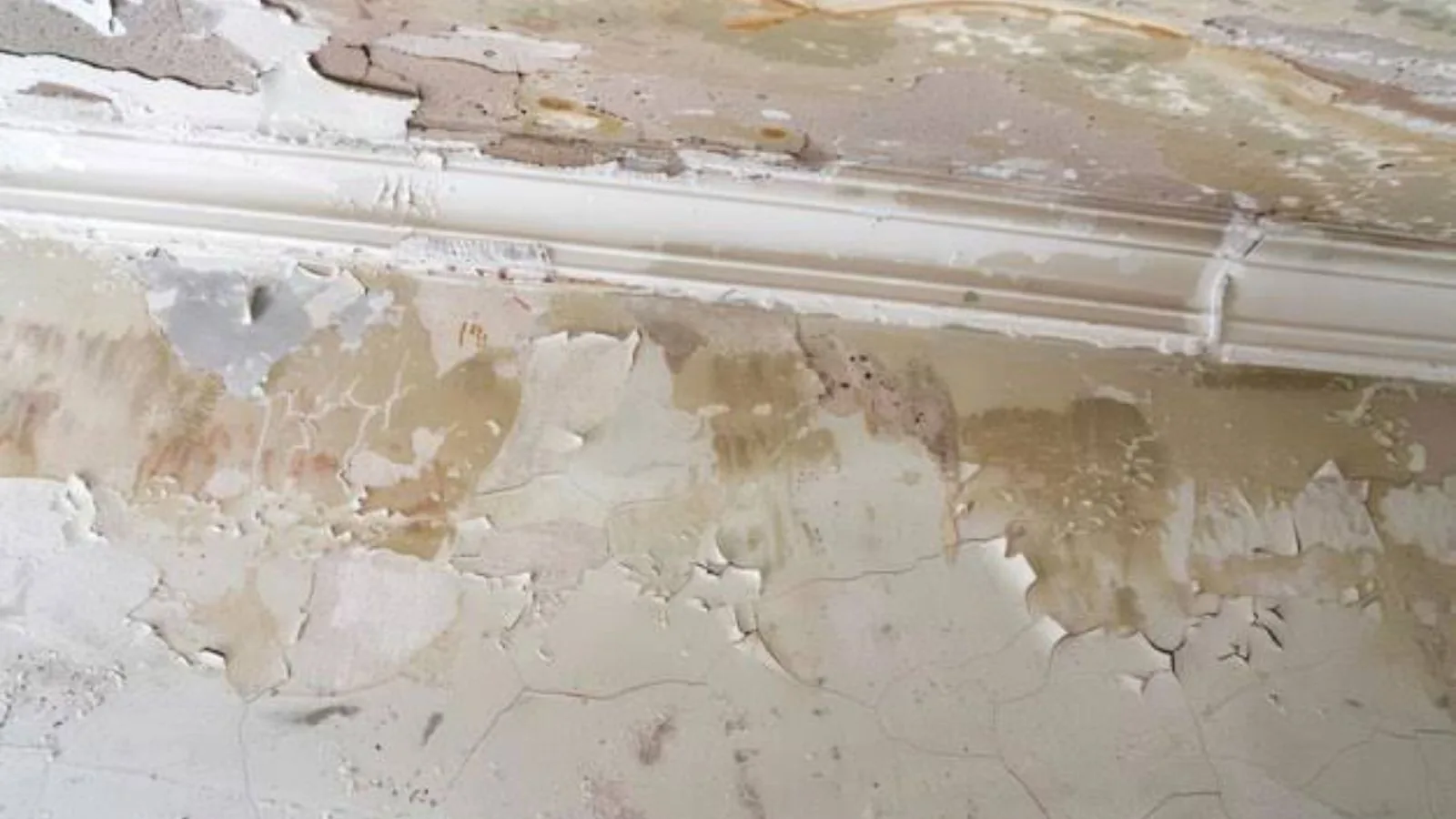
Wall and drywall water damage repair is about finding how far the water went and what must be cut out. In Findlay, the 24/7 dispatch line can arrange a moisture check and a dry-out. The first step for you is to stop the source and avoid painting or caulking over a stain, since that hides moisture without removing it.
Signs water is inside the wall
Baseboards that swell, paint that bubbles or peels, a stain that darkens when humid and drywall that feels soft or crumbles are the usual signs. Wallpaper that lifts at the seams and a musty smell near the floor also point to moisture. A stain that is dry and stable may be an old leak. A stain that grows is an active one.
Sheetrock, the common name for drywall, wicks water upward from a wet floor, sometimes a foot or more above the water line, so the damage can extend well beyond the visible stain.
Cut it out or dry it
Drywall that was clean-water wet for a short time can sometimes be dried in place with air movers, injection systems that push air into the cavity and dehumidifiers. Drywall that is soft, sagging or contaminated is cut out. The standard practice is to cut a measured height above the visible water line and check the wet insulation and studs behind it.
Plaster walls, found in many older buildings, dry differently and take longer. A crew assesses them with a meter before deciding.
| Material | Typical response | Notes |
|---|---|---|
| Painted drywall, clean water | Dry in place if caught early | Meter readings must confirm. |
| Soft or sagging drywall | Cut out and replace | Weakened and unsafe to leave. |
| Insulation in the cavity | Usually replaced | Holds water and dries slowly. |
| Wood studs | Dry and keep | Dense wood can usually be saved. |
| Plaster and lath | Case by case | Assessed with a meter. Longer drying. |
How the repair is done
After drying, the crew patches, tapes, mudds, sands, primes and paints the walls. Baseboards are replaced or reinstalled. Matching paint and texture takes care, so the repair is blended into the wall instead of leaving a visible patch. Repair starts only after readings show the wall is dry, which prevents a repeat.
Cost factors for wall and drywall repair
| Factor | Effect |
|---|---|
| Height and length of wall | More area means more cutting, patching and paint. |
| Insulation | Wet insulation is replaced. |
| Baseboard and trim | Replacing or reinstalling trim adds labor. |
| Finish and paint match | Texture and color matching take time. |
| Drying days | Equipment time is itemized. |
Insurers often cover wall damage that resulted from a sudden leak and exclude repeated seepage. Take photos of the stain and the cutout and keep your records.
Water stains or soft walls?
Call the 24/7 line. Dispatch can arrange a moisture check.
☎ (567) 406-9153Wall damage is often caused by burst pipes or appliance leaks, and leaks from above are covered on the ceiling page. Drying methods are explained on the structural drying page.
How a crew decides what to cut
A moisture meter shows how high water has wicked up a wall. A thermal camera shows where cool, wet areas sit behind the surface. Together they guide a clean cut, usually a straight line above the wet zone, so only damaged drywall is removed and the rest can be dried.
Ask to see the readings that justify the cut. A wall that reads dry at two feet does not need to be opened at four. Smaller cuts cost less to patch, and they leave more original surface in place.
What to do before a crew arrives with a wet wall
- Do not cut into a wall that may hold wiring without checking power.
- Move furniture away from the wall and pull baseboard only if it is loose.
- Do not paint or caulk over a wet wall.
- Run a dehumidifier in the room while you wait.
- Photograph stains, bubbling and any musty smell dates.
Wall and Drywall Water Damage questions answered
Can I just paint over a water stain?
Not before it is dry and the source is fixed. Paint over wet drywall hides moisture and can trap it.
How high is drywall cut after a flood?
It depends on the wicking above the water line, which the crew measures with a meter. The cut is usually higher than the visible line.
Is plaster different from drywall?
Yes. Plaster dries slowly and may be damaged differently, so it is assessed with a meter.
Why does the wall smell?
A musty smell suggests moisture. A meter finds where.
Do baseboards need replacing?
Often if swollen or stained. Painted solid wood can sometimes be reinstalled.
Walls hide the wet
Call dispatch for a moisture check. A crew can find what the stain does not show.
☎ (567) 406-9153