
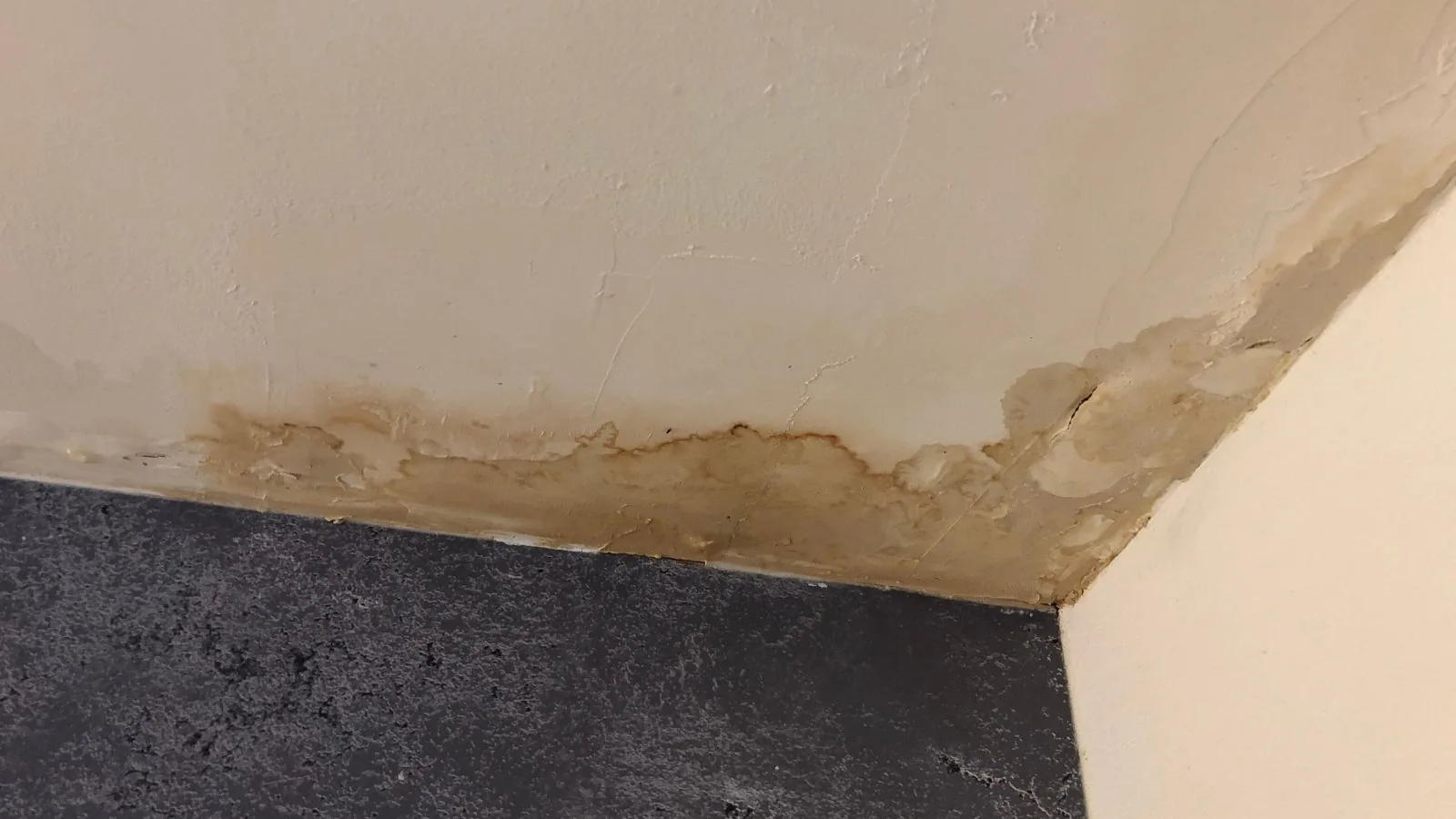
Ceiling water damage repair in Findlay starts by figuring out where the water is coming from, because a stain overhead is the last place it showed up.
A bulging or dripping ceiling is an emergency, and the 24/7 dispatch line is open for it. While you wait, move people, furniture and electronics out from under it, and shut off the water supply if the source is a bathroom or a pipe.
When a wet ceiling becomes an emergency
A brown ring that has been dry for months is a repair item. A ceiling that is dripping, bulging, sagging or darkening is an emergency, because water-heavy drywall can drop without warning. Poke nothing. If light fixtures are wet or buzzing, leave the room and shut off power at the panel only if it is dry and safe to reach.
Same-day response is offered when crews are available. After-hours roof leaks during storms are common, and dispatch handles them like daytime calls.
Wet light fixtures
Water pooling in a ceiling fixture is an electrical hazard. Stay clear, cut power at the panel only if you can reach it dry, and call the electric utility or 911 if you see sparks or smell burning.
Common sources of ceiling water in Findlay homes
Water above a ceiling usually comes from four places: a roof leak that ran through decking and insulation, a bathroom or laundry above, a supply or drain line in the joists and an HVAC unit or condensate line in the attic. Findlay gets about 24 inches of snow a year, per NOAA's 1991 to 2020 normals, so an ice-damaged roof edge is a realistic source in late winter.
Only a thorough inspection tells you which. Dispatch can describe what to look for, and the crew traces the water back with a moisture meter and thermal imaging camera.
What ceiling repair involves
Wet insulation above the ceiling is removed, the board is cut back to dry, solid material and the cavity is dried with air movers. The ceiling is then patched, textured and painted. If the water was dirty, such as from a rooftop or a drain line, the removal goes further.
| Sign | What it usually means | Next step |
|---|---|---|
| Brown ring, dry to the touch | Old leak, possibly stopped | Confirm dry with a meter, then stain-block and repaint. |
| Bubbling or peeling paint | Active or recent moisture | Find the source and dry the board before any paint. |
| Sagging or bulging | Water trapped in drywall | Keep clear, call now. Controlled release, then removal. |
| Dripping | Active leak | Stop the source, catch the water, call dispatch. |
Roof leak damage: what happens after the roofer
A roofer stops water from coming in, and restoration handles what already came in. Both are separate trades. Wet attic insulation and decking can hold water for weeks after the roof is patched, which is why a roof repair alone often leaves a ceiling still stained or wet.
Tell your roofer to photograph the leak area before patching, since those photos help your claim. Then have the structure checked with a moisture meter before the ceiling is closed up.
Cost factors for ceiling water damage repair
| Factor | Effect |
|---|---|
| Ceiling area | More square feet of board means more drying and finishing. |
| Insulation | Wet attic insulation is removed and replaced. |
| Water category | Roof or drain water may need extra removal. |
| Texture and paint | Matching a popcorn or knockdown finish takes time. |
| Access | Second-floor rooms and vaulted ceilings need scaffolding or lifts. |
Insurers often cover sudden roof or plumbing failures, while long-term seepage is often excluded. Check your policy and keep the roofer's report with your photos.
Ceiling dripping or sagging now?
Call the 24/7 line. Dispatch will tell you how to protect the room while a crew is arranged.
☎ (567) 406-9153Water that came through a ceiling often ends up in the walls below, so the wall and drywall page is the next read. Drying equipment is covered on the structural drying page, and a leaking line above the room may be a burst pipe.
What to do before a crew arrives under a wet ceiling
- Keep people and pets out of the room below a sagging ceiling.
- Turn off any light fixture that is wet or has water around it.
- Place a bucket under drips and move furniture aside.
- Do not poke a bulging ceiling unless a bucket is in place, since water can release at once.
- Photograph the stain, then circle its edge with a pencil and note the time.
A crew working to the ANSI/IICRC S500 standard measures moisture, sets equipment to match and records readings until the materials reach their dry targets.
Ceiling Water Damage Repair questions answered
Do you handle ceiling water damage emergencies at night or on weekends in Findlay?
Yes. The dispatch line is open 24/7, and sagging ceilings and storm leaks are treated as urgent. Same-day response is offered when crews are available.
Should I pop a bulging ceiling?
Do not do it yourself. A controlled puncture releases trapped water, but the board can fall. Leave it to a crew or follow dispatch's advice.
Does a roof leak need a roofer or a restoration company?
Both. A roofer stops the water, and restoration dries and repairs the ceiling and insulation. Calling dispatch first helps you sequence the two.
How long does a ceiling take to dry?
It depends on the area and the insulation above. The crew checks readings on each visit and tells you when drying is complete.
Will a stain-blocking primer fix a brown ring?
Only after the source is fixed and the ceiling is fully dry. Painting over wet drywall hides the problem for a short time.
A wet ceiling can fall
Keep clear and call the 24/7 line. Dispatch will tell you how to protect the room.
☎ (567) 406-9153