
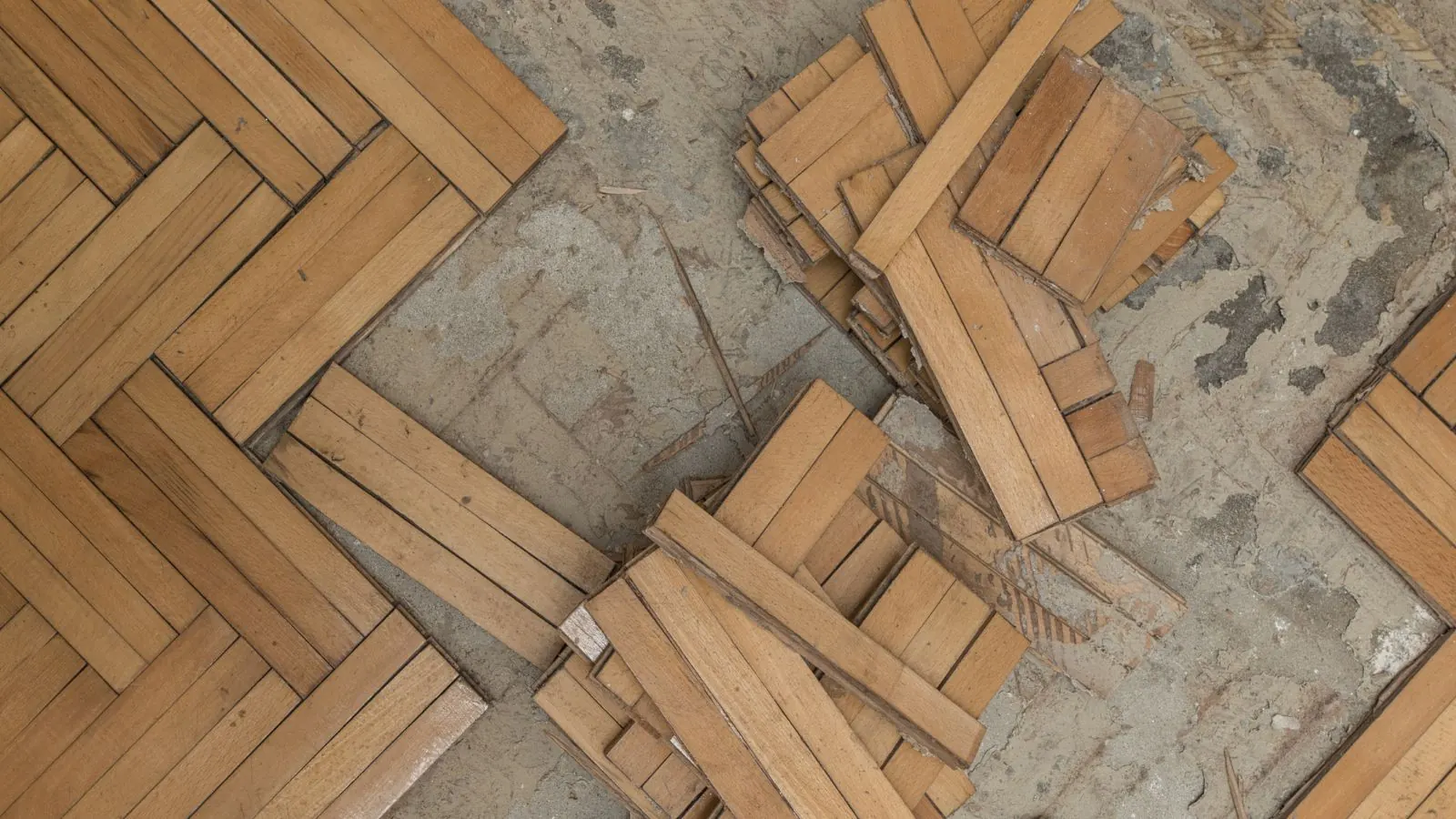
Hardwood floor water damage repair starts with a question: can the floor still be dried, or is it past that point? In Findlay, the dispatch line is open 24/7 and can arrange a moisture check. The first step is to stop the water, wipe the surface and keep the room cool and the air moving, without sanding or sealing anything yet.
Signs your wood floor has absorbed water
Cupping is when the edges of a board rise higher than the middle, and it usually appears days after a leak. Crowning is the opposite. Buckling is when boards lift off the subfloor. Dark staining, a musty smell and gaps between boards also show up. Laminate swells at the edges and the seams, and it rarely returns to its original shape.
Hardwood is slow to show damage because water enters from underneath or at the edges. A floor that looks fine on day one can start to cup on day four.
Dry it or replace it?
Timing and the amount of water decide it. Solid hardwood caught quickly can sometimes be dried with a mat system that pulls moisture through the boards, along with dehumidification, and many floors flatten again as they dry. Engineered wood is more stable but has a thin top layer. Laminate has a fiberboard core that usually swells for good once soaked.
If boards have buckled or the subfloor underneath is wet, drying in place is less likely to work. That is not a failure. It is a floor that took on more water than it could give back.
| Floor type | Dry in place? | Typical outcome |
|---|---|---|
| Solid hardwood | Possible if caught early | May flatten as it dries. Sanding comes after full dryness. |
| Engineered wood | Sometimes | Thin wear layer limits sanding, so replacement is more common. |
| Laminate | Rarely | Fiberboard core swells and usually needs replacing. |
| Parquet | Case by case | Glued blocks can lift and need relaying. |
How crews dry a wood floor
The crew removes standing water, checks the boards and subfloor with a moisture meter and may use drying mats or injection panels to draw water out of the wood. Dehumidifiers pull the moisture from the room, and readings are taken each visit. Sanding or refinishing only begins after the wood reads dry, since finishing wet wood traps moisture.
Cost factors for hardwood floor water damage
| Factor | Effect |
|---|---|
| Floor type | Solid, engineered and laminate have different outcomes. |
| Area affected | Larger floors need more drying equipment. |
| Drying days | Wood dries slowly and is monitored daily. |
| Subfloor condition | Wet subfloor adds scope. |
| Refinish or replace | Sanding and refinishing is a separate stage. |
Insurance often covers sudden water damage to flooring. Slow leaks are often excluded. Ask your insurer how it handles flooring, and keep a sample of the damaged boards if they are being replaced. Owners of older homes along South Main Street can read the South Main Street guide.
Wood floor cupping or lifting?
Call the 24/7 line. Dispatch can arrange a moisture check and a drying plan.
☎ (567) 406-9153Wood floors are often wet from appliance leaks, kitchen leaks or a slab leak. If the floor is carpeted instead, see the carpet page.
What to ask before anyone sands or replaces
Wood moves slowly. A floor that cups or crowns in the days after a leak may settle as it dries, so the decision to sand, repair or replace is usually made after the moisture readings return to normal. Ask the crew to show readings from the boards and from the subfloor.
Ask also how the floor is being dried. Special drying mats and controlled airflow are used on wood so it does not dry too quickly and split. If the answer is that a fan will be pointed at it, ask for something better.
What to do before a crew arrives on a wet wood floor
- Walk carefully, since wet wood and finish are slippery.
- Mop up standing water and lift rugs and furniture off the floor.
- Do not use heat guns, hair dryers or space heaters to speed drying.
- Do not seal the floor or put plastic over it, which traps moisture.
- Photograph cupping, staining and any gaps along the edges.
The published ANSI/IICRC S500 standard is the industry's common language for water categories, loss classes and drying goals.
Hardwood Floor Water Damage questions answered
Can a cupped hardwood floor be saved?
Often, if it is dried quickly and the cupping is mild. Boards that have buckled or soaked through are less likely to recover.
How long before I can sand and refinish?
Only after the wood and subfloor read dry. The crew tells you when. Sanding wet wood can lock in problems.
What about laminate?
Laminate has a fiberboard core that swells when soaked, and it rarely recovers. Replacement is the usual outcome.
Should I take up the boards myself?
Do not, unless a crew advises it. Lifting boards at the wrong time can damage tongues and grooves.
Does the humidity in the house matter?
Yes. Drying works best in a controlled room, and the crew will set dehumidifiers and manage air flow.
Wood floors need a measured plan
Call dispatch for a moisture check and a drying plan.
☎ (567) 406-9153