
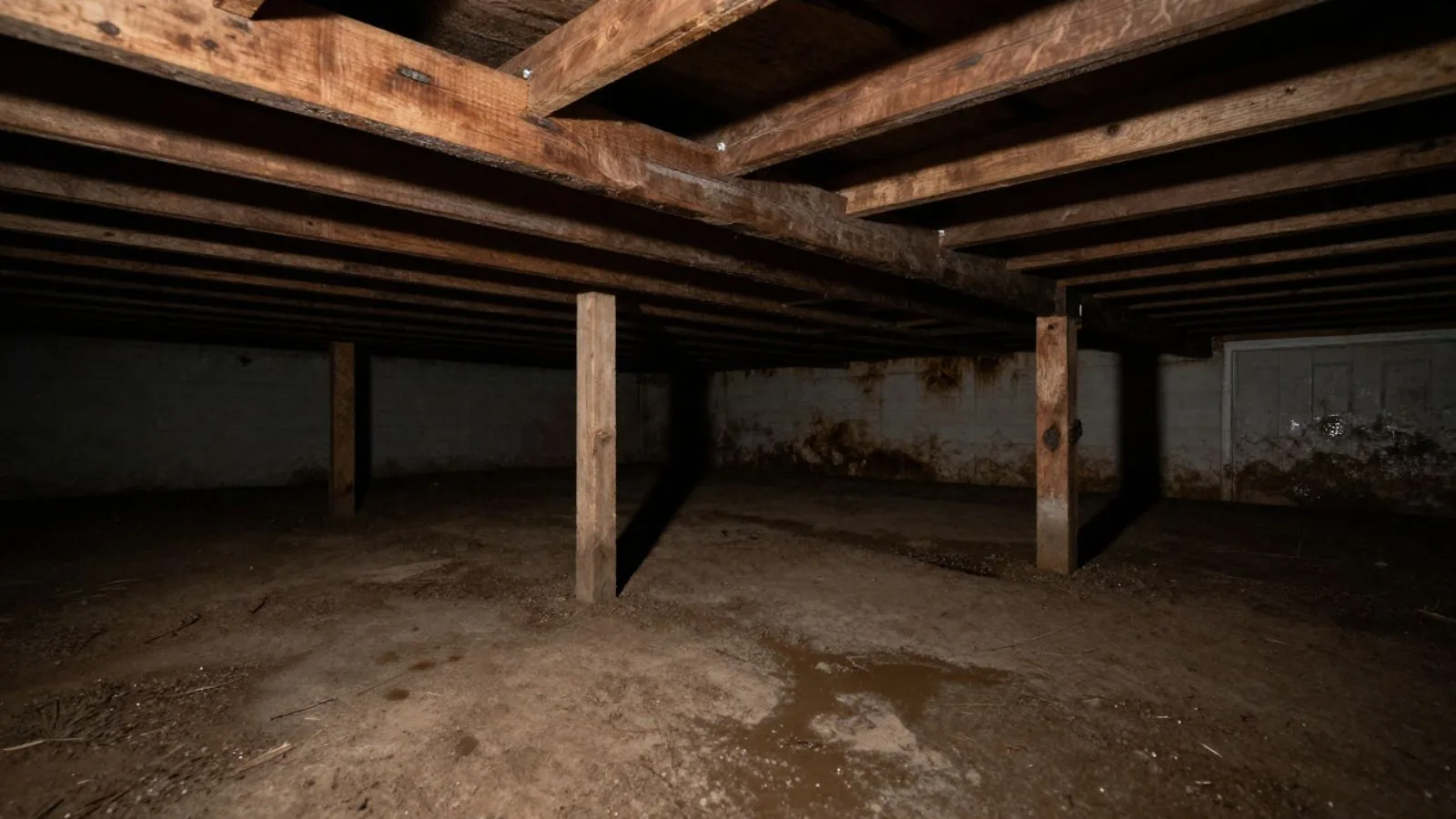
Crawl space water damage cleanup deals with water, wet insulation and damp framing in the shallow space under a house. In Findlay the dispatch line is open 24/7, and a crew can pump out the space, remove ruined insulation and dry the joists and subfloor. The first thing you can do is stay out of the space if wiring or a furnace is near the water.
What crawl space water damage looks like from above
Signs on the living floor include cold or springy spots, cupping hardwood, a musty smell and doors that stick. Down below, look for pooled water, dark stains on joists, sagging insulation and a floor that feels damp. Standing water is more urgent than a damp smell, but both deserve a look.
Homes without a crawl space, such as those on full basements or slabs, can skip this page. No public data counts how many Findlay homes have crawl spaces, so this page does not claim how common they are.
How water gets under the house
Common sources include a leaking supply or drain line, a failed sump pit, surface water draining toward the foundation and groundwater after long rain. Humid air can also condense on cold surfaces. Which source applies changes the fix, so a crew traces it before closing anything up.
If the water arrived from outside, it is not clean. Ground water and runoff are classified as Category 2 or 3 under the ANSI/IICRC S500 standard, and the cleanup changes accordingly. See the flood damage page for that.
How crews clean and dry a crawl space
The crew extracts standing water, removes wet insulation and any vapor barrier that has failed and dries joists and subfloor with air movers and dehumidifiers. Moisture readings on the framing show when it is dry. If plumbing leaked, the plumber fixes it. If water entered from the ground, the crew explains whether a drainage or sump fix is the real solution.
| Problem | Likely cause | Restoration response |
|---|---|---|
| Standing water | Plumbing leak or groundwater | Pump out, dry framing, find the source. |
| Wet insulation | Leak above or humid air | Remove and replace after drying. |
| Damp joists | Long-term moisture | Dry to verified readings. Inspect for rot. |
| Failed vapor barrier | Torn or displaced sheeting | Replace after the ground is dry. |
Restoration is not encapsulation or waterproofing
Restoration dries the space and removes what was damaged. It does not stop groundwater from returning. If water keeps entering, a waterproofing or drainage contractor is the right trade, and an honest crew will say so. Dispatch can describe what to ask them.
Cost factors for crawl space cleanup
| Factor | Effect |
|---|---|
| Access | Low clearance slows every task. |
| Water depth | Deeper water means longer pumping. |
| Insulation area | More wet insulation means more removal and disposal. |
| Drying time | Dirt floors and damp framing dry slowly. |
| Repairs | Vapor barrier and insulation are rebuilt after drying. |
Crawl space damage from a sudden pipe break is often covered, while seepage and groundwater often are not. Ask your insurer how your policy treats it.
Water or damp framing under your floor?
Call the 24/7 line. Dispatch will tell you what to check before anyone goes in.
☎ (567) 406-9153If the under-floor space flooded from a pipe, the burst pipe page explains the plumbing side. Wet floors above are covered by the hardwood floor page and the structural drying page. Homes in Arlington and other nearby towns get the same service.
What to do before help arrives with a wet crawl space
- Do not crawl into standing water, since wiring and ductwork may be below the joists.
- Turn off the water supply if a pipe is the source.
- Do not enter a tight space alone or without a light and a clear way out.
- Photograph what you can see from the access hatch.
- Keep the hatch closed if sewage may be involved.
Crawl Space Water Damage questions answered
Is a damp crawl space an emergency?
Standing water or a leak is urgent. A damp smell alone is less so, but it is worth a meter check. Dispatch can advise by phone at any hour.
Can I remove the wet insulation myself?
Small areas, yes, with protective gear and care around wiring. Larger or contaminated areas should go to a crew.
Will drying fix a recurring wet crawl space?
Only if the source is fixed. Restoration dries what is wet. A drainage contractor stops recurring groundwater.
How do I know if joists are damaged?
Soft or dark wood, a spongy floor and fungal growth are signs. A crew checks with a meter and a probe.
Does insurance cover crawl space water?
Often for sudden plumbing failures and often not for groundwater or neglect. Ask your insurer.
The crawl space is easy to miss
Call dispatch if you suspect water under the floor. A crew can check and plan the dry-out.
☎ (567) 406-9153