
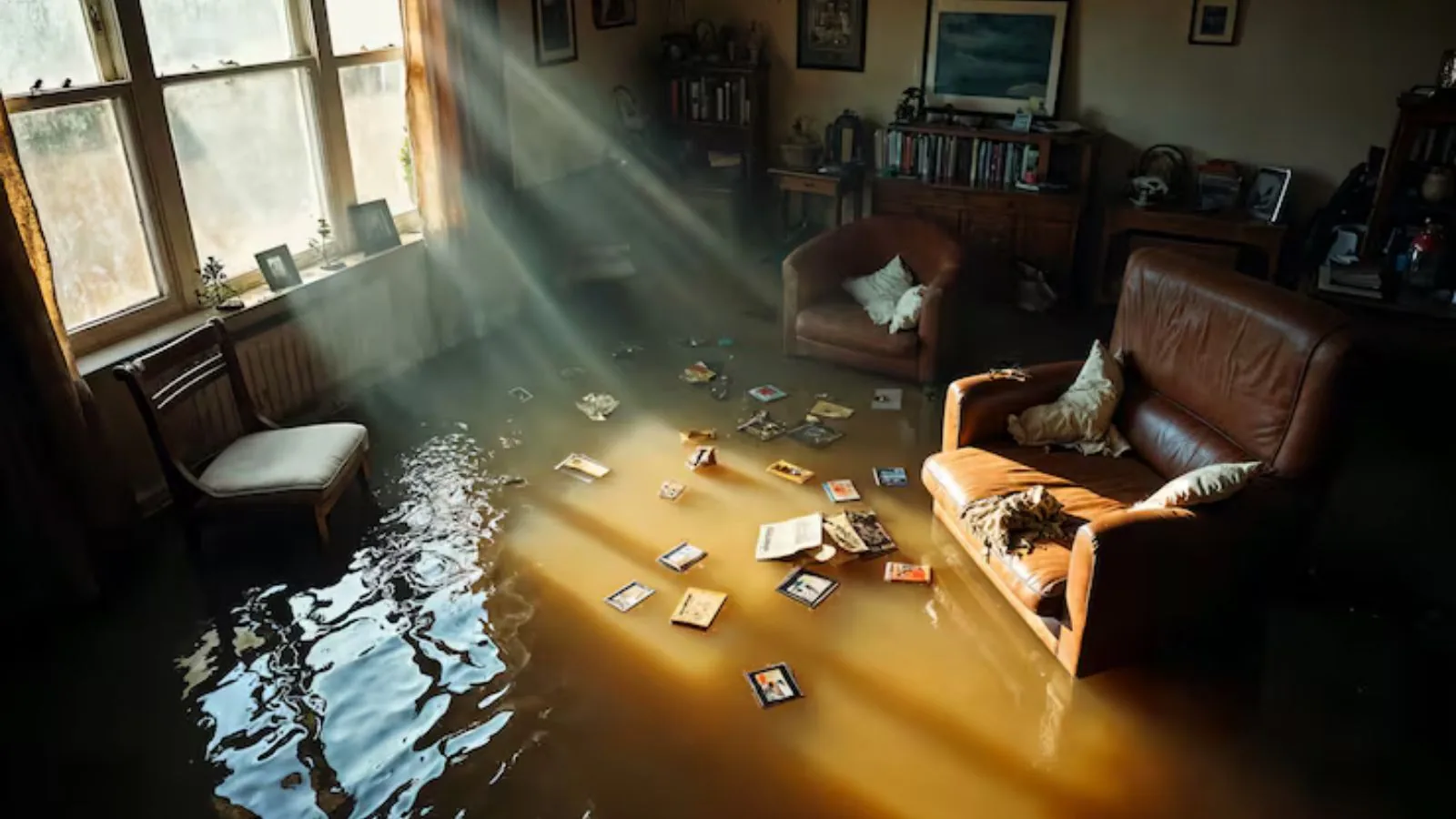
Flood damage cleanup in Findlay starts with a safety assumption: floodwater from the river, a storm drain or the ground is contaminated until proven otherwise. The dispatch line answers 24/7, including during storms. While you wait, stay out of the water if power may be on, keep children and pets out, and do not run the furnace or any appliance that sat in the flood.
Flooding that needs help right now
Flood damage is an emergency whenever water is inside the living space and still rising or still draining slowly. It is also an emergency when the water is gone but the house is still wet, because carpets, pad and drywall that stayed wet from floodwater are not safe to keep. Same-day response is offered when crews are available, and after-hours calls are common during heavy rain.
If your street has been closed or your power is off, tell dispatch. Access and safety are part of the plan.
Floodwater and electricity
Do not enter a flooded basement if the panel, outlets or appliances are underwater. Call your electric utility or 911 to report the hazard before you call a restoration line.
The Blanchard River and Findlay flooding
The National Weather Service describes how heavy rain from August 19 to 21, 2007 sent the Blanchard River near its record stage. The record is 18.5 feet from 1913. Those two numbers are the reason Findlay homeowners near the river are told to check the FEMA flood map for their address and ask the city zoning office about floodplain rules, which the office handles as part of its permits.
River flooding is not the only way water enters. Storm runoff can overwhelm a window well, and groundwater can push up through a basement floor after weeks of rain. All of it counts as flood damage, and all of it is handled as Category 3 under the ANSI/IICRC S500 standard.
What flood cleanup involves
Crews wear protective gear, pump out the water and remove porous materials that the flood soaked, such as carpet, pad, insulation and low drywall. Hard surfaces and framing are cleaned and sanitized and then dried with air movers and dehumidifiers. Personal belongings are sorted into what can be cleaned, what must be discarded and what needs a specialist.
This is not a do-it-yourself job for a reason. Floodwater carries sewage, fuel and soil, and wet drywall and insulation can be a source of lingering odor. EPA's mold guidance also advises calling a professional experienced with contaminated water.
| Material | Usually kept? | Reason |
|---|---|---|
| Carpet and pad | No | Porous and contaminated, and cost to replace is lower than the risk. |
| Drywall below the water line | No | Wicks water upward and holds contaminants. |
| Solid wood framing | Yes, cleaned and dried | Dense enough to be cleaned and dried to a verified reading. |
| Concrete and tile | Yes, cleaned | Non-porous or low-porosity surfaces can be sanitized. |
| Upholstered furniture | Case by case | Depends on the water category and how long it sat. |
Flood insurance and records
The Ohio Department of Insurance states that flood insurance is typically not included in standard homeowners, renters or business policies, that it must be bought separately and that a waiting period usually applies. That means a flood claim often comes from a different policy than a pipe-burst claim. Ask your agent which you have, and call the department's consumer line at 800-686-1526 if you are unsure.
Before anything is thrown out, photograph the water line on the walls, the belongings and the damage. Crews also record moisture readings and equipment logs as the job moves.
| Factor | Effect |
|---|---|
| Water category | Category 3 adds protective gear, disposal and sanitizing. |
| Depth and duration | Deeper water that sat longer reaches more materials. |
| Square footage | Area drives equipment count and labor. |
| Contents | Furniture and belongings add sorting and disposal. |
| Rebuild scope | Replacing drywall, flooring and trim is a separate stage. |
Flood water inside your home?
Call the 24/7 line. Dispatch will ask where the water came from and what is still running.
☎ (567) 406-9153Flood cleanup often overlaps with the basement page, the storm damage page and the sewage backup page. Homes in nearby Van Buren can also be affected after heavy rain.
Flood Damage Cleanup questions answered
Do you handle flood damage emergencies at night or on weekends in Findlay?
Yes. The dispatch line is staffed 24/7 and flood calls are common during storms and overnight rain. Same-day response is offered when crews are available.
Is floodwater always Category 3?
River and surface floodwater is classified as Category 3 under the S500 standard, because it picks up contamination as it moves. A crew confirms the category on site.
Does homeowners insurance cover flood damage?
Usually not. The Ohio Department of Insurance says flood coverage is typically separate and has a waiting period. Check your policy and ask your agent.
What should I take photos of?
The water line on the walls, the damaged floors, the belongings and any structural damage, before anything is moved. Date and time stamps help.
Can I keep the carpet if I dry it quickly?
Carpet soaked by floodwater is generally removed, because of contamination. Clean-water spills are a different case, and the carpet page explains the difference.
Flooding does not wait for morning
Call the 24/7 line and describe where the water is. Dispatch will arrange pumping and cleanup.
☎ (567) 406-9153