
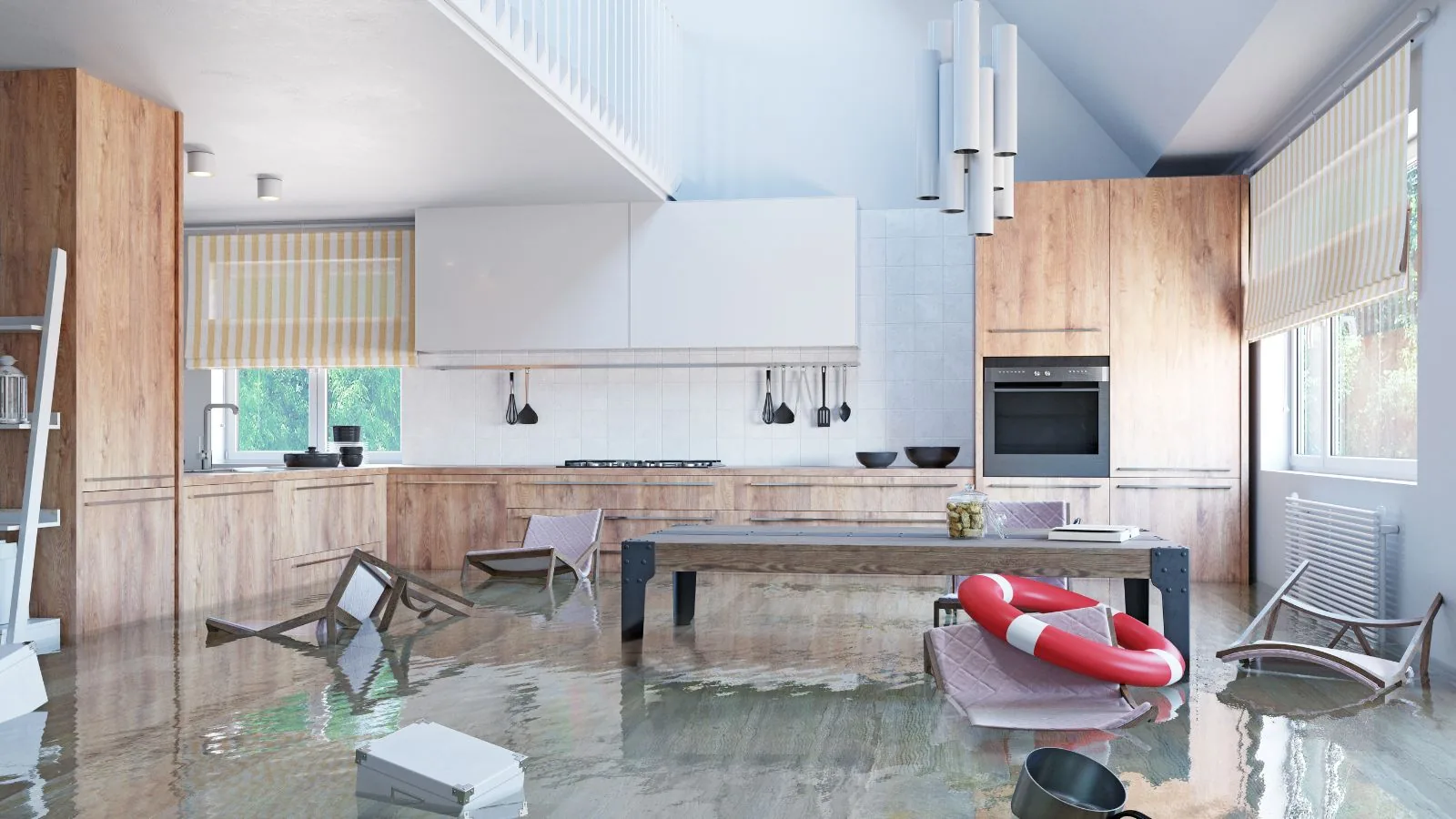
Kitchen water damage restoration deals with what a leak does to cabinets, flooring and the walls behind them. In Findlay, the 24/7 dispatch line can arrange extraction and drying, and the first step for you is to close the shut-off valves under the sink and move items out of the base cabinet.
A slow leak under a sink can go unnoticed for weeks, which makes a kitchen different from a bathroom.
Water under the kitchen sink: what to check
Look at the back and bottom of the sink base for swelling, darkening or peeling laminate. Check the supply lines, the drain slip joints, the dishwasher hose and the disposal. A damp smell, a soft cabinet floor or warped toe kicks usually mean water has been there longer than a day.
If you see standing water on the floor, treat it like any other leak, and if the dishwasher or fridge is the source, the appliance leak page has the shut-off steps.
Why cabinets are the hard part
Many kitchen cabinets are particleboard or medium-density fiberboard with a thin finish. Once those materials absorb water they swell and do not return to shape, so a soaked cabinet base is often replaced rather than dried. Solid wood and plywood boxes can sometimes be dried and saved.
Granite and quartz tops are rarely damaged by water, but the cabinet below them may be. A crew can check the box with a moisture meter before deciding.
| Material | Usually saved? | Notes |
|---|---|---|
| Particleboard cabinet base | Often replaced | Swells and loses strength when soaked. |
| Plywood or solid wood cabinet | Often saved | Dries with air movers if caught early. |
| Tile floor | Yes | Check the subfloor beneath. |
| Vinyl or laminate floor | Depends | Water can travel under seams. |
| Drywall behind the sink | Depends | Cut out if saturated. |
How the dry-out works in a kitchen
The crew removes the affected cabinet base or toe kick, extracts water and uses air movers and a dehumidifier to dry the floor and wall. Equipment is placed to leave the kitchen usable where it can be. Moisture readings confirm when the cavity behind the cabinets is dry, which is the part people miss.
Cost factors for kitchen water damage
| Factor | Effect |
|---|---|
| Cabinet material | Particleboard bases are usually replaced. |
| Run of cabinets | Longer runs mean more removal and reinstall. |
| Flooring type | Tile dries faster than wood or laminate. |
| Appliance moves | Pulling out a range or fridge adds labor. |
| Rebuild scope | Cabinets, counters, flooring and paint are itemized. |
Insurers often cover sudden kitchen leaks but may exclude gradual seepage from a worn line. Ask your insurer how it reads your policy and keep the damaged parts until they are cleared.
Kitchen leak or swollen cabinets?
Call the 24/7 line. Dispatch will tell you how to protect the cabinets and floor.
☎ (567) 406-9153A kitchen leak can run into the ceiling below, which the ceiling page covers, and into the floor, covered by the hardwood floor page. A burst line behind a sink follows the burst pipe page.
What to ask about cabinets and countertops
Cabinets are the expensive part of a kitchen loss, so the question is what can be dried and what must be replaced. Solid wood boxes sometimes dry in place, while particleboard swells and rarely returns. Ask the crew to check the toe kick and the cabinet floor, since water collects there first.
Countertops are usually fine, but the cabinets under them may not be. If the counters must be removed to replace a cabinet, that adds to the scope and should be listed. Ask whether plumbing and appliances need to be disconnected, and by whom.
What to do before a crew arrives in a wet kitchen
- Unplug appliances only if the cord and outlet are dry, otherwise leave the power alone.
- Shut off the water supply to the sink, dishwasher or fridge line.
- Empty the cabinet under the sink and open doors so air can reach the base.
- Do not eat food that was in contact with floodwater or sewage.
- Photograph the cabinets, the floor and the appliance label.
Professional drying practice follows the published ANSI/IICRC S500 standard, which sorts water into three categories and sets drying goals by material. Ask any crew how it applies that standard to your job.
Kitchen Water Damage questions answered
Can wet kitchen cabinets be saved?
Plywood and solid wood often can. Particleboard that swelled usually cannot. A moisture meter check tells you which you have.
How do I find a slow leak under the sink?
Dry the area, put a paper towel in the cabinet and check it after a few hours. Look at the supply lines, drain joints and the dishwasher connection.
Do I need to remove the countertop?
Often not. The base cabinet can be removed or opened below the top. The crew advises on the specific layout.
Will the floor need replacing?
Tile usually does not. Laminate and wood may. The subfloor beneath determines what comes next.
Is kitchen water damage an emergency?
Standing water is. A damp cabinet from a slow leak is less so, but it should be checked soon.
Kitchen leaks hide in cabinets
Call the 24/7 line. Dispatch can arrange a moisture check and a drying plan.
☎ (567) 406-9153