
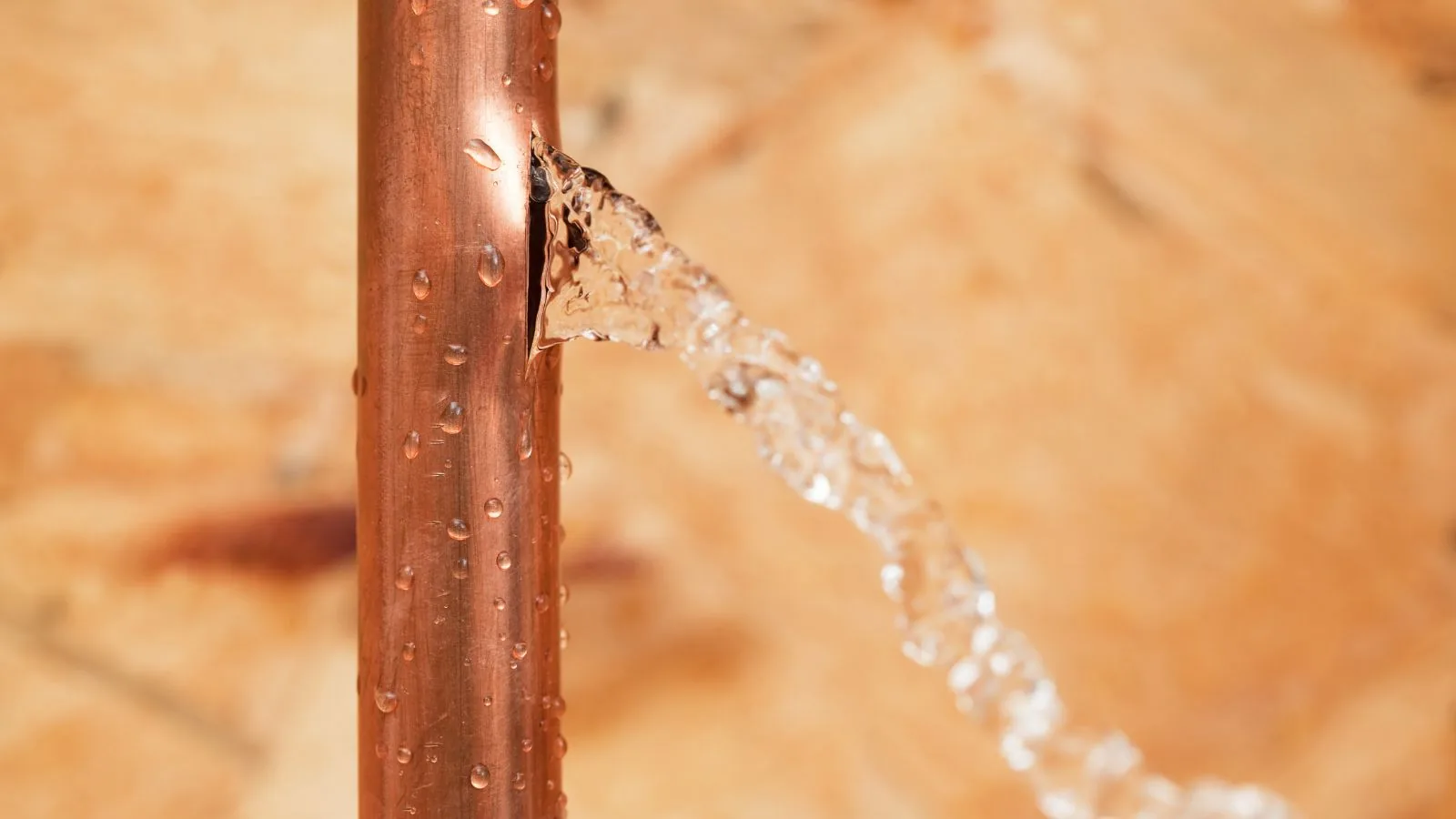
Burst pipe water damage cleanup begins at the main shut-off valve, not with a mop. A split supply line is under pressure and will keep flooding the house until the water is stopped, so close the main valve first and then call the 24/7 dispatch line for Findlay. Open a faucet at the lowest point to drain what remains, and move anything valuable off the wet floor.
Burst pipe: what to do in the first ten minutes
- Close the main water valve, usually near where the line enters the house or beside the water meter.
- If power is off to the area, leave it off. If water is near outlets, do not touch switches with wet hands.
- Open the lowest faucet to relieve pressure, and the highest to let air in.
- Photograph the pipe, the wet areas and the water line on the walls before anything is moved.
- Call dispatch. Same-day response is offered when crews are available, at any hour.
If you cannot find the main valve, the city can shut water at the curb. That is a job for the utility, and the number is on your water bill. A ceiling that is bulging with water should be left alone, because a controlled puncture releases it, but a collapse can follow suddenly. Stay clear and tell dispatch about it first.
Why burst pipes cause more damage than they seem to
Water from a split line travels. It runs down the inside of walls, collects on subfloors and soaks insulation long before a stain appears on a ceiling below. A pipe that burst on the second floor of a Findlay home can wet the kitchen ceiling, the wall cavity behind it and the basement, all from one crack the size of a seam.
That is why crews map moisture with meters and a thermal camera before deciding what to open. Opening a wall to look is a smaller job than guessing wrong and closing it up wet.
What the cleanup and drying involve
Burst pipe water is usually Category 1 at first, meaning clean at the source, so quick action saves more material. The crew extracts standing water, removes soaked insulation and baseboards where needed and sets air movers and dehumidifiers. Drywall that stayed wet is cut out and replaced, and drywall that stayed dry is left alone.
| Stage | What happens | Why it matters |
|---|---|---|
| Stop and extract | Water is shut off and standing water is removed. | Every hour of sitting water pushes it deeper into wood and gypsum. |
| Map and open | Meters and thermal imaging locate wet cavities, and affected material is opened. | Trapped moisture is the cause of later odor and rot. |
| Dry | Air movers and dehumidifiers run until readings reach a dry standard. | Drying is verified with readings, not by feel. |
| Repair | The plumber's fix is finished, then drywall, paint and trim are rebuilt. | The pipe itself is a plumbing repair and is separate from restoration. |
A plumber fixes the pipe, and restoration deals with what the water did. Both are needed, and neither replaces the other. Dispatch can tell you which to call first for your situation.
Cost factors after a burst pipe
| Factor | Effect |
|---|---|
| How long the pipe ran | Minutes of flow versus hours changes how many rooms are wet. |
| Floors affected | A second-floor failure can reach three levels. |
| Materials | Plaster, hardwood and insulation hold water longer than tile or concrete. |
| Drying days | More wet material means more equipment days. |
| Rebuild scope | Drywall, paint and trim are itemized separately from mitigation. |
Sudden pipe failure is often a covered event, but policies differ on the pipe itself, on frozen lines and on gradual leaks. Ask your insurer how yours reads and keep photos, readings and receipts together.
Pipe burst and water still moving?
Close the main valve, then call. Dispatch is open 24/7 and will tell you what to do next.
☎ (567) 406-9153A burst line often ends up in walls and cabinets. The wall and drywall page covers cutting and replacing wet board, and the kitchen page covers cabinets and sink bases. If the pipe froze first, the frozen pipe page explains the cause. For a Hancock County home outside the city, check the Arlington page.
Burst Pipe Water Damage questions answered
Do you handle burst pipe emergencies at night or on weekends in Findlay?
Yes. The line is staffed 24/7 and burst pipes are treated as urgent at every hour. Same-day response is offered when crews are available, and dispatch will give you shut-off instructions while a crew is arranged.
Who do I call first, a plumber or a restoration company?
Close the main valve, then call whoever can reach you fastest. A plumber repairs the pipe, and restoration removes the water and dries the structure. Calling dispatch first is fine because they can explain the order for your situation.
How do I know if water got inside the walls?
Look for bubbling paint, soft baseboards, warm or musty air and stains growing after the leak stopped. A moisture meter and thermal camera confirm it without tearing out good drywall.
Should I turn the power off after a burst pipe?
Only if you can reach the panel without standing in water. If water is touching outlets or the panel itself, leave and call the utility or 911 first.
Will insurance pay for a burst pipe?
Often, when the failure is sudden and accidental, but policies vary on exclusions. Ask your insurer, and note that the Ohio Department of Insurance consumer line is 800-686-1526.
A burst pipe does not stop on its own
Close the main valve and call the 24/7 line. Dispatch will arrange extraction and drying.
☎ (567) 406-9153