
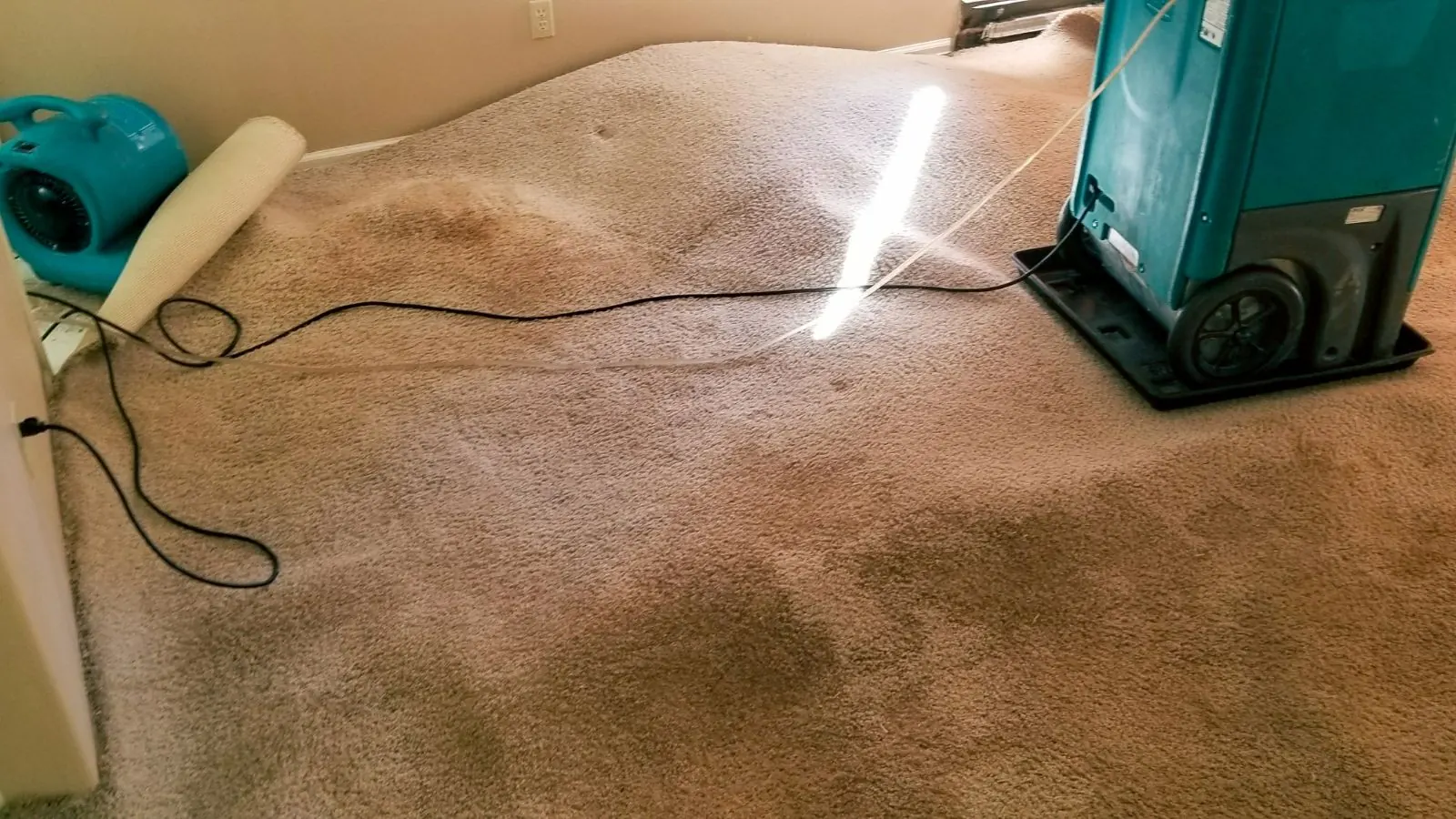
The line between a do-it-yourself job and a professional one is not about effort. It is about where the water is and what kind of water it is. A glass of water on a tile floor is yours to handle. A washing machine hose that has been leaking into a wall for a week is not, because the water is somewhere you cannot see or reach.
Use the table below as a rough screen. When two columns seem to apply, treat the situation as the more serious one. A moisture meter reading is cheap compared with the cost of closing up a wet wall.
A quick decision table
| Situation | Usually DIY? | Why |
|---|---|---|
| Small spill on tile, vinyl or sealed wood, wiped up within an hour | Yes | Water stays on the surface. |
| Wet carpet over a small area from clean water, caught right away | Maybe | Pad and subfloor can still hold water, so check. |
| Water that soaked drywall, insulation or subflooring | No | Moisture is inside the structure. |
| Water more than a day old in a closed room | No | Materials are saturated and conditions favor microbial growth. |
| Sewage or river and storm floodwater | No | Contaminated. EPA advises calling a professional. |
| Water touching outlets, a panel or appliances | No | Electrical hazard. Utility or 911 first. |
What you can safely do yourself
- Stop the source and shut off the water if it is plumbing.
- Mop and towel up standing clean water on a hard floor.
- Run fans and a dehumidifier in a small, dry-able space.
- Lift furniture off carpet and place foil or plastic under legs.
- Open cabinet doors and drawers to let air in.
- Photograph everything before you start.
These steps help even when a professional is coming. They slow the spread while you wait, and they cost nothing. Just do not move wet items in ways that risk strain, and do not stand in water if there is any chance of live power.
Why wall and floor water needs a meter
Drywall wicks water upward, insulation holds it and framing keeps it for days. None of that is visible. A moisture meter and a thermal camera show it, and drying equipment is sized to remove it. A household fan moves air across a surface but does not pull moisture out of a cavity.
This is the core idea behind professional drying. It is not about stronger equipment. It is about finding the water first. The structural drying page describes the process, and the wall and drywall page explains what happens when a wall stays wet.
When contamination changes the answer
EPA's mold cleanup guidance for homeowners says to call in a professional who has experience cleaning and fixing buildings damaged by contaminated water.
That applies to sewage and floodwater, and it is the reason the sewage backup page and the flood damage page lead with safety and not with equipment. The same EPA page says to fix plumbing leaks and other water problems as soon as possible, and to dry all items completely.
A fair question about cost
Many people try to save money by drying a job themselves and end up paying twice, once for the failed attempt and again for the full job. Others call a crew for a small spill and pay for a visit they did not need. A phone conversation costs nothing, and dispatch will say honestly when a crew is not needed.
A simple test before you start
Press a hand against the wall or floor near the wet area. If it feels cool or damp beyond the visible stain, water has spread. Check the baseboard, the carpet edge and the cabinet toe kick. Water travels along the path of least resistance, and it often shows up several feet from the source.
If you are still unsure, take photos, run a fan and call. A conversation with dispatch costs nothing and may save a wall. If the answer is that you can handle it, you will have a clearer plan. If the answer is that a crew should look, you will have lost no time.
What a half-finished DIY job costs
The common failure is closing up too soon. A wall that looks dry on the surface can hold water inside for days, and once it is painted over, the problem returns as stains or odors. If you do try drying yourself, keep a log of what you did, and consider a moisture check before you close anything.
Findlay note: weather that makes it harder
Findlay averages about 38 inches of precipitation a year according to NOAA's 1991 to 2020 normals, and the National Weather Service recorded how heavy rain from August 19 to 21, 2007 sent the Blanchard River near its record stage.
In humid summer weather or in a closed-up winter house, a household dehumidifier has to work against that moisture, which is one reason DIY drying is slower here than a first guess suggests.
If your home is in Van Buren or Arlington, the same rule applies. Contaminated or hidden water is a call to a crew.
Not sure if it needs a crew?
Call the 24/7 line and describe what you see. Dispatch will tell you honestly what is needed.
☎ (567) 406-9153Questions about dry it yourself or call a pro?
Dispatch is open 24/7 and will say plainly what a crew would do next.
☎ (567) 406-9153A local question answered
How can I tell if water is inside a wall?
Look for baseboards that swell, paint that bubbles, a musty smell and stains that grow. A moisture meter confirms it without cutting the wall.
Can I use a wet-dry vacuum on sewage?
No. EPA advises calling a professional for contaminated water. A household vacuum can also spread contamination.
Does Findlay's humidity make drying slower?
It can. Humid air holds more moisture, so dehumidifiers work harder. A crew sets equipment to match conditions.