
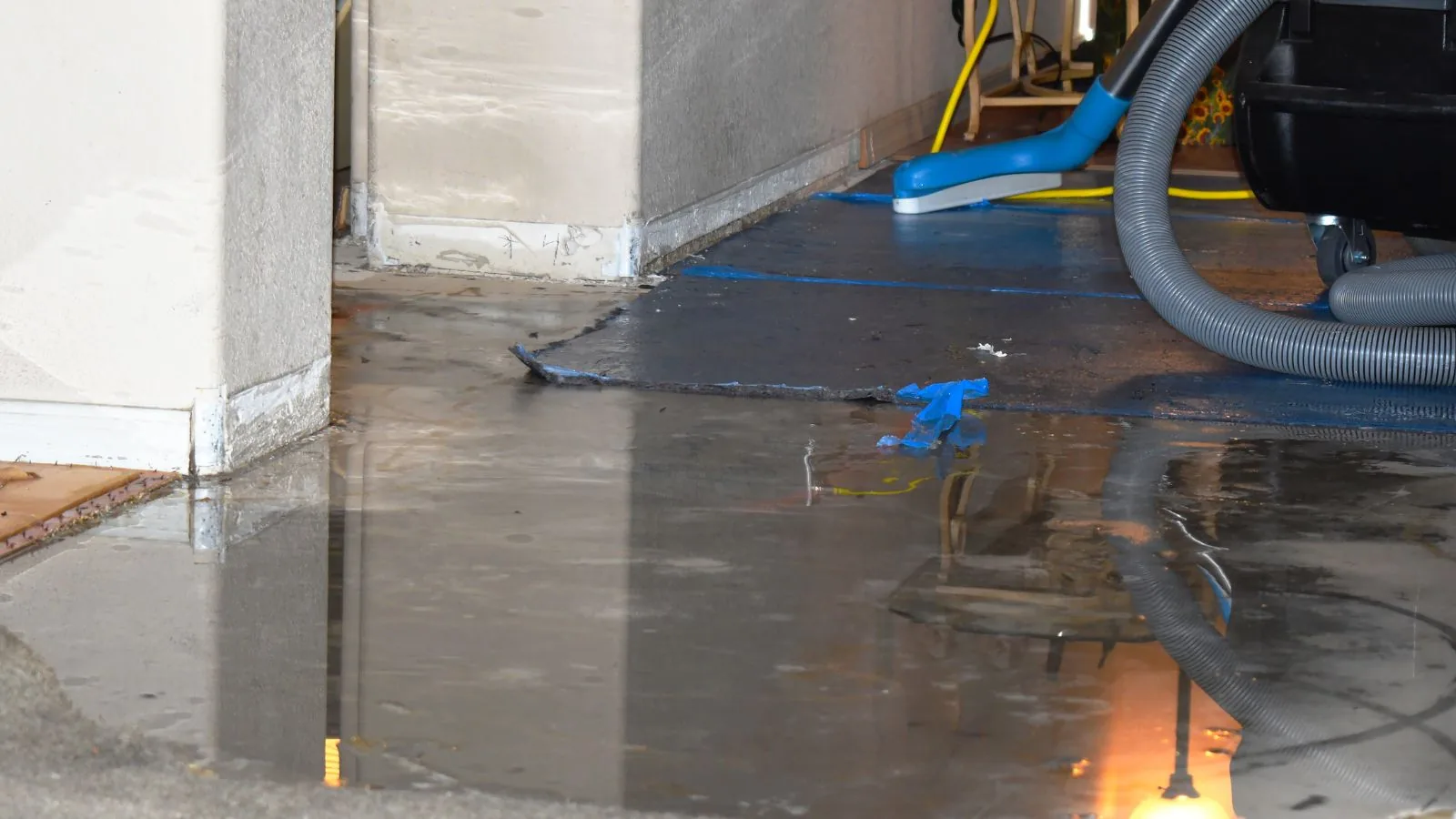
A water damage claim is built from three things: a cause, a date and records. The cause and the date determine whether the policy responds. The records determine how smoothly the claim moves. Most delays come from missing photos and missing receipts, not from the damage itself, which is why the first hour matters even before you call anyone.
This guide lists the steps in the order they usually happen. It is general information and not a promise about any claim. Check your policy, ask your insurer and follow the instructions your adjuster gives you.
Step 1: Stop the water and make the space safe
Close the main valve if the source is plumbing. Turn off power to wet areas only if you can reach the panel dry. Keep people and pets out of dirty water. This is also the first thing a policy typically expects of you, which is to prevent further loss. Do it before anything else, and write down the time you did it.
Step 2: Photograph and video before anything moves
Walk through each wet room and record the water, the source, the water line on the walls, the damaged belongings and the model and serial label of any failed appliance. Take wide shots and close-ups. Video with spoken narration is useful because it captures sequence and detail. Do this before furniture is moved or anything is thrown out.
Step 3: Call your insurer and begin the claim
Report the loss promptly, since many policies expect timely notice. Ask for a claim number, the adjuster's name and what they want you to keep. Write down the date, time and name of every call. If your policy has additional living expense coverage, ask about it now rather than later.
| Item | What to record | Why it helps |
|---|---|---|
| Photos and video | Every wet room, the source, water line, belongings | Shows scope and cause. |
| Timeline | When you noticed, what you shut off, who you called | Supports a sudden-loss claim. |
| Moisture readings | Daily readings by room from the crew | Shows drying progress. |
| Equipment logs | Air movers and dehumidifiers and days on site | Supports mitigation costs. |
| Receipts | Emergency repairs, hotel stays, supplies | Reimbursement requests. |
| Inventory | Damaged items with age and estimated value | Contents claim. |
Step 4: Get a written scope of work
A scope lists what was damaged, what will be removed, what equipment will run and what will be rebuilt. It is the document your adjuster compares with their own estimate. If the two differ, the scope explains why. Read the structural drying page to see how drying is documented, and ask the crew to share its readings with the adjuster.
Step 5: Keep damaged items until the adjuster says otherwise
Throwing out a soaked sofa before the adjuster sees it can make the claim harder to value. Photograph it thoroughly, and ask whether you can discard it. For sewage or flood-contaminated items, ask for written permission to dispose of them, because keeping them in the house is not safe.
Step 6: Follow up and keep a file
Claims move at different speeds. Keep a single folder, paper or digital, with every photo, receipt, email and call note. If something is unclear, ask in writing. If you disagree with an outcome, the Ohio Department of Insurance has a consumer line at 800-686-1526 for questions about your rights.
Mistakes that slow a claim down
The most common problem is a gap in the record. A homeowner fixes things quickly, which is the right instinct, but nobody photographed the damage first. The second is vague timing. If you cannot say when the water started, the insurer has to guess, and guesses rarely go in your favor.
A third problem is mixing up repair and mitigation. Emergency drying is usually expected right away. A full rebuild can wait for the adjuster's review. Ask which is which before you approve work, and keep the two invoices separate.
- Starting demolition before taking photos.
- Throwing away damaged items without a list.
- Signing a blanket authorization without reading it.
- Waiting days to report the loss.
- Losing receipts for emergency purchases.
A calm way to talk to the adjuster
Be factual. Describe what you saw, what you did and when. Share your photos and the crew's scope. If you do not know an answer, say so rather than guess. If the adjuster's estimate looks lower than the contractor's, ask for the reasons in writing and share them with the contractor, who may be able to document the difference.
Findlay note: reporting after local storms
The Ohio Department of Insurance publishes a severe weather toolkit with post-storm claim-filing guidance at insurance.ohio.gov, and it reminds consumers that flood insurance is typically separate from standard policies. After a heavy storm in the Findlay area, adjusters can be busy, so report early and keep your documentation tidy.
If the loss was caused by river or surface flooding, the claim may run through a different policy than a pipe failure. The flood damage cleanup page explains what to photograph. Callers in McComb and Van Buren follow the same steps.
Need crews to document and dry?
Call the 24/7 line. Photos, readings and equipment logs are recorded as the work moves.
☎ (567) 406-9153Questions about water damage insurance claim steps?
Dispatch is open 24/7 and will say plainly what a crew would do next.
☎ (567) 406-9153A local question answered
How soon should I report a water damage loss?
As soon as practical. Many policies expect prompt notice, and early reporting keeps the timeline clean. Check your policy for specific language.
What if I already threw something away?
Tell the adjuster and describe it with any photos or receipts you have. Do not hide it, and ask what other records can support the claim.
Who handles claims after a severe storm in Findlay?
Your own insurer handles it. The Ohio Department of Insurance offers a severe weather toolkit and a consumer line at 800-686-1526 for questions.